When questions arise about a parent’s ability to meet a child’s needs, professionals may commission a parenting assessment to understand the family’s circumstances, identify strengths, and explore any concerns affecting the child’s safety and wellbeing.
In some cases, a solicitor, local authority, or another commissioning organisation may consider using an independent social worker to undertake the assessment. The aim is to obtain a structured professional assessment that addresses specific questions about parenting capacity.
But what does an independent social worker parenting assessment involve? How does the process work, what information is considered, and when might this type of assessment be appropriate?
This guide explains the role of an independent social worker, the assessment process, and the key considerations for professionals arranging an assessment.
An independent social worker parenting assessment is an assessment carried out by a social work professional who is commissioned to examine specified questions about a parent’s ability to care for a child.
The term independent social worker generally describes the professional’s working or commissioning arrangement. It does not, by itself, establish that the person is an expert witness or that their report has a particular status in court proceedings.
The assessment may explore a parent’s ability to meet a child’s needs, understand safeguarding concerns, provide appropriate care, and make changes where difficulties have been identified.
The precise scope depends on the referral questions, the family’s circumstances, the social worker’s expertise, and any relevant commissioning instructions or court directions.
An assessment may consider:
The purpose is to address the questions that have been commissioned, not to provide a general opinion on every aspect of a family’s circumstances.
An independent social worker may be considered when a case requires a particular assessment, an external professional perspective, or expertise relevant to the referral questions.
The reasons vary between cases. A commissioning organisation may want an assessment that focuses on specific parenting capacity issues or requires a professional with relevant experience of the family’s circumstances.
Possible reasons for considering an independent social worker include:
An independent assessment is not automatically better than an assessment undertaken by a local authority social worker. Its suitability depends on the questions being asked, the professional’s experience, the quality of the available information, and the arrangements under which the work is commissioned.
Before making a referral, professionals should establish what the assessment needs to achieve and whether an independent social worker is appropriately qualified and experienced to undertake it.
The areas covered depend on the referral questions and the needs of the child. The assessment should be focused on the issues relevant to the case rather than following a one-size-fits-all checklist.
The social worker considers the child’s individual circumstances, including their age, development, health, emotional wellbeing, and any additional needs.
The assessment may explore whether the parent understands what the child needs and can respond appropriately as those needs change.
For example, the social worker may consider how a parent responds to distress, maintains routines, provides supervision, or supports the child’s development.
An assessment may examine the parent’s existing strengths as well as areas where difficulties have been identified.
This can include practical caregiving, emotional availability, boundaries, supervision, decision-making, and the ability to provide predictable care.
The purpose is to understand how the parent’s abilities relate to the child’s needs and the specific questions raised in the referral.
Where safeguarding concerns are relevant, the social worker may explore whether the parent understands the concerns, recognises potential risks, and can take appropriate steps to protect the child.
The assessment may consider the parent’s explanation of previous events, the impact on the child, and any changes made in response.
It may also examine whether the parent can recognise warning signs and seek help when necessary.
Where the referral concerns previous parenting difficulties, the assessment may explore what the parent understands about those difficulties and whether meaningful change has occurred.
This can involve considering the parent’s reflections, practical examples, engagement with support, and ability to apply learning in everyday situations.
A parent’s stated intention to change is not necessarily the same as demonstrated change. The assessor may need to consider the available evidence and the timeframe in which progress has occurred.
The social worker may consider the support available to the parent and whether it can realistically help meet the child’s needs.
Relevant circumstances might include housing, family support, access to services, practical responsibilities, and other factors affecting daily care.
The assessment should distinguish between support that is genuinely available and support that is only anticipated.
There is no single process used for every independent social worker parenting assessment. The approach depends on the commissioned questions, the available evidence, the child’s circumstances, and any relevant instructions.
However, the process may include several stages.
The commissioning professional provides information about the family, the concerns being considered, and the questions the assessment must address.
The referral should make clear what the assessor is being asked to examine and provide relevant background documentation.
Where the assessment relates to family court proceedings, applicable court directions and the status of the proposed evidence should be clarified before the work begins.
The social worker reviews relevant records and background information provided for the assessment.
Depending on the case, this may include previous assessments, social work records, care plans, information about the child’s needs, and relevant court documents.
The assessor may identify gaps in the information and clarify whether additional records are needed.
The social worker may meet with the parent to explore their experiences, understanding of the child’s needs, response to concerns, and approach to parenting.
The number and format of meetings depend on the assessment’s scope and the information required.
The parent should be given appropriate information about the purpose of the assessment and what participation will involve.
Where appropriate to the referral questions, the assessment may include observation of parent-child interaction or consideration of the family’s daily circumstances.
A home visit may be included if it is relevant to the assessment. The method should be suitable for the questions being considered rather than assumed to be identical in every case.
Observations should be considered in context and alongside other relevant information.
After gathering the relevant information, the social worker analyses the evidence and prepares a report addressing the commissioned questions.
The report may identify parenting strengths, areas of concern, relevant limitations in the information, and conclusions within the scope of the assessment.
Recommendations may be included where they have been requested and fall within the assessor’s remit.
For more information about what reports can contain, read our guide to what a parenting assessment report tells the family court.
A clear referral helps the independent social worker understand the purpose of the assessment and the information needed to complete it.
The precise requirements depend on the case, but a referral may need to include:
The referral should avoid vague instructions such as asking the assessor simply to decide whether someone is a good parent. Instead, it should identify the particular questions that need to be answered and explain their relevance to the child’s welfare.
Where important information is unavailable, the commissioning professional should clarify what can be obtained and how any limitations may affect the assessment.
Our guide to parenting assessment referral information provides further detail on preparing a referral.
Selecting an appropriate assessor involves more than confirming availability.
Solicitors, local authorities, and other commissioning organisations should consider whether the social worker’s qualifications, experience, and proposed approach match the needs of the case.
Important questions include:
Commissioners should also clarify the proposed fee, expenses, scope of work, and any relevant timescales before confirming the referral.
The most suitable assessor is one whose competence and proposed approach match the requirements of the case.
For further guidance, see our article on choosing an independent parenting assessment provider.
Not necessarily.
An independent social worker may be commissioned to undertake an assessment, but independence alone does not mean that the professional has been appointed or authorised to provide formal expert evidence in court proceedings.
The distinction depends on the nature of the work, the professional’s role, and the applicable court rules and directions.
Where expert evidence is proposed in family court proceedings, the relevant requirements should be checked. A solicitor should clarify the intended role of the assessor and whether any permission or procedural steps are required.
Professionals should not assume that every independently commissioned report has the same legal status or can be used in the same way.
Parents who are unsure about the status of a report in their proceedings should seek advice from their solicitor.
There is no universal timeframe for an independent social worker parenting assessment.
The duration can depend on:
The time needed to complete the assessment activities may differ from the total time between referral and submission of the report.
Commissioners should discuss the expected process and deadlines with the provider before the assessment begins. Any proposed timeframe should reflect the actual requirements of the case rather than an assumed standard duration.
Read our guide to how long a parenting assessment takes for more information.
Once the assessment is complete, the report is submitted according to the agreed commissioning arrangements.
The findings may then be considered alongside other relevant information to inform care planning, professional decision-making, or family court proceedings.
The report does not automatically determine the final outcome for the child. Its significance depends on the questions it addresses, the evidence available, and the responsibilities of the relevant decision-maker or court.
Further information or assessment may be required if important questions remain unresolved.
For a more detailed explanation of the next steps, see our guide to what happens after a parenting assessment is completed.
A solicitor may consider commissioning an assessment to address specific questions about parenting capacity or a family’s circumstances. Whether an independent social worker is appropriate depends on the case, the professional’s expertise, and the relevant commissioning or court requirements.
A local authority may commission independent assessment services where appropriate to the case and its requirements. The scope, suitability, and commissioning arrangements should be established before the work begins.
No. A home visit may form part of an assessment where it is relevant to the referral questions. The assessment method depends on the family’s circumstances and the work that has been commissioned.
No. The use and status of a report depend on the circumstances, the way it was commissioned, and the applicable court rules and directions. Where the report is intended to be used in proceedings, its status and any procedural requirements should be clarified in advance.
The main distinction may relate to their working and commissioning arrangements. Both roles can involve social work practice, but their responsibilities in a particular case depend on the work they have been asked to undertake. An independent social worker does not automatically replace the local authority’s responsibilities.
A parent can raise concerns about factual inaccuracies, missing information, the assessment process, or the report’s reasoning. The appropriate process depends on the commissioning arrangements and whether the report forms part of court proceedings. Legal advice may be appropriate where the report is being used in a case.
The commissioning professional should clarify the assessment questions, scope, available records, expected deliverables, fees, reporting arrangements, and relevant deadlines. Any applicable court directions or requirements should also be considered.
An independent social worker parenting assessment can help professionals examine specific questions about parenting capacity, a child’s needs, and relevant safeguarding concerns.
Its usefulness depends on clear commissioning instructions, relevant professional expertise, appropriate assessment methods, and a report that explains the evidence and reasoning behind its conclusions.
For solicitors and local authorities, choosing an assessor whose experience matches the case and defining the purpose of the work from the outset can help establish a clear and proportionate assessment process.
Family Safeguarding Assessments provides assessment-related services for professionals working with children and families. Solicitors, local authorities, and other professionals considering an assessment can visit Family Safeguarding Assessments to learn more about the services available and discuss the requirements of a referral.
When making an enquiry, provide the assessment questions, relevant background information, any applicable court directions, and the expected timescales. This helps establish the scope of the work and whether the service is suitable for the case.
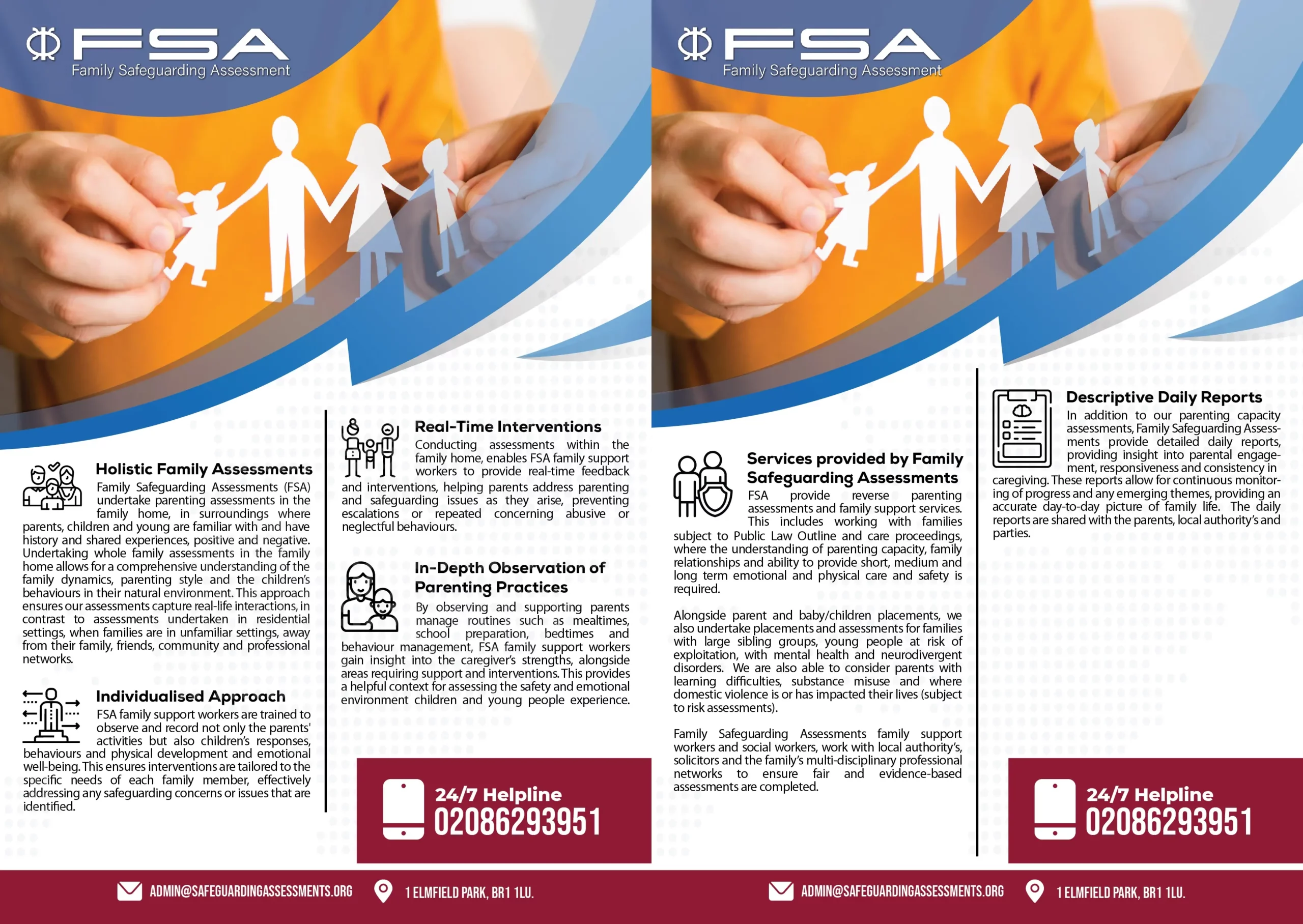
At Family Safeguarding Assessments (FSA), we understand the importance of keeping families together while ensuring the safety and well-being of children